
On 15 September 2026, the Group of Chief Scientific Advisors (GCSA) met for the fiftieth time. Since 2016, the Group has advised the European Commission on questions ranging from cancer screening to solar radiation modification. Its seven members are appointed in a personal capacity. They are not Commission employees, and they keep their university posts alongside the role.
Mangala Srinivas is the Group's Deputy Chair. She is Professor of Cell Biology and Immunology at Wageningen University & Research in the Netherlands, and joined the Group in May 2025. Her route into science advice ran through the Young Academy of Europe, which she chaired for two terms.
On the day of the 50th meeting, she spoke with us about what the job involves, how an Opinion is made, why independence matters, and what happens when the evidence is incomplete.
This interview has been edited for length and clarity.
Many countries have chief scientific advisers. What does it mean to be a Chief Scientific Advisor to the European Commission?
We act as a bridge between policymakers and scientists, because these two groups often speak different languages. And not only that: when we talk about scientists and scientific evidence, it's also from different fields, so that is already very broad. And then policymakers as well can come from different Directorates-General (DGs) and different backgrounds and interests. So I see our work as bridging all this together, with the aim of positive impact on society.
You sit on the Group in a personal capacity, not as a Commission employee. Why does that independence matter?
It is essential that the Advisors are truly independent. We're not employed by the Commission, and we're not representing any political interests. We're working on the scientific side, and I also still work full-time at the university. That said, we are human, and we have our own fields, our own research, and our own biases. And, of course, we work within the framework of European values and the SDGs, the UN Sustainable Development Goals. I think we balance our individual perspectives by working as a group of seven people from different fields. And eventually, before policies are implemented, there's also broader public consultation.
What happens between the moment a Commissioner asks the Group a question and the moment the Opinion is delivered?
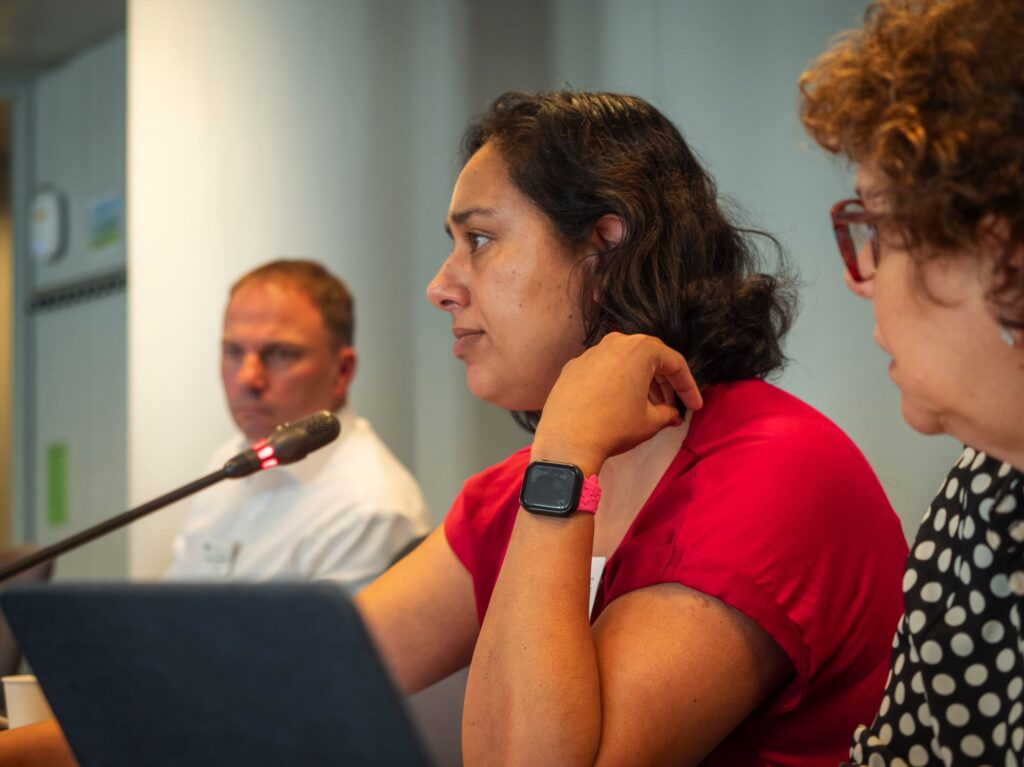
We first receive a draft scoping paper and can comment on it to some extent. Once we receive the final scoping paper, the SAM Secretariat reviews the policy landscape. There are always lots of existing policies on any topic: they review existing policies, summarise them, and map where they sit. Meanwhile, SAPEA sets up a working group, bringing in experts on the topic, usually 20 to 30 people, from various fields and various countries within the EU. They conduct an evidence review. We bring together both sets of information and, with the support of the SAM Secretariat, develop policy recommendations in language that is clear and meaningful to policymakers.
People may assume the Advisors summarise the science and stop there. What do you add that the evidence review doesn't?
The GCSA does not summarise the scientific literature. What we do, and I think that's a critical step, is really make the policy recommendations based on the SAPEA Evidence Review Report.
Another misconception that I've heard a few times about the GCSA is: how can you have the expertise to cover everything? And that's just it: we don't. We don't have the expertise to cover everything. There's no way that's possible. With seven people, you have a good balance of fields and points of view, but we work from evidence produced by real experts in the field.
Being part of the GCSA teaches us what policymakers need: what they find clear, what remains unclear, and what they can and cannot use. It is a learning process because, although scientists are trained to write reviews, scientific reviews as written are not particularly useful to policymakers.
Given that the seven advisors come from different disciplines, how do you agree on the wording?
When drafting the final opinion, we review it together word by word because the seven of us come from different fields, and certain words may carry a specific meaning in one discipline while seeming neutral in another. Words such as "significant", or "toxic" or "dangerous" when it comes to chemicals, for example, can mean something specific to a chemist but something different to a non-chemist. So we need to be careful that the terms we use are correct and accurate.
Evidence is rarely as tidy as "science says X". How do you handle it when the research is incomplete, but a decision still has to be made?
SAPEA brings in experts from different fields, seniority levels, and countries to ensure strong representation. Even so, the role is very complex because the evidence is, indeed, often incomplete. By incomplete, I mean we sometimes just don't have all the knowledge about a topic. And you see this, for example, with the COVID-19 situation, or with cancer, or even microplastics. We just don't have all the information that we need. That's what we have to deal with. Existing policy can also complicate things.
Uncertainty in evidence is always difficult, but navigating that uncertainty is something we all do every day. For example, if you need to pick which school to send your child to, you're making a decision based on incomplete evidence, because the ideal situation would be to send your child to multiple schools at the same time and see which has the best outcome, and that's impossible. So, in everyday life, we are constantly dealing with uncertainty.
We must make the best decisions we can based on the knowledge available at the time, while remaining open to revising an Opinion as new evidence emerges. This is okay. We're not changing our mind; rather, we must be open to the idea that new evidence might require us to reinterpret what we wrote. And I think if you don't do that, then you're not being a good scientist.
Can you point to an EU policy that looks different because of scientific advice? How would an ordinary person feel that difference?
I don't think the average person will realise how much policy affects their lives. Consider cancer screening: how often you go to get screened and who pays for it, this all comes out of policy. Even seemingly minor changes, such as the widespread adoption of USB-C chargers and EU-wide bans on plastic drinking straws, are shaped by policy. These all come from evidence-based policy, and they have a very real impact on your lives. The same goes for advanced materials: we read about critical raw materials in the news all the time. Policy has a lot of impact, but I don't think people always connect it to policymakers.
But keep in mind that policymaking usually isn't fast, and it shouldn't be. Even after recommendations are made, it can take five years or more for them to become policy. You may not see the effect immediately. That doesn't mean it doesn't happen.
What has this role taught you that you didn't expect about policymaking?
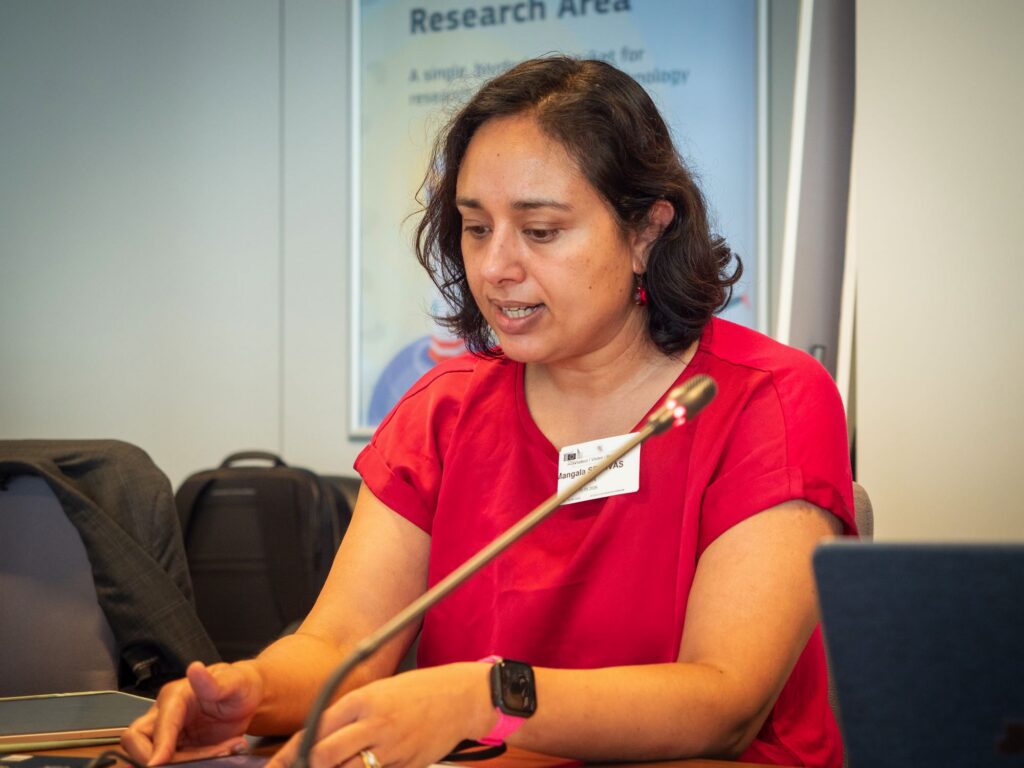
I always wondered: why does it take so long to come up with something simple? And then you realise how complex it is. Even within the Commission, different DGs might have different interests: for example, promoting industry and supporting sustainability, which are not necessarily incompatible goals. You need to listen to all of these opposing points of view. I hadn't expected that.
Before this, I had met only a few people in policy, and only briefly. What really surprised me was how deeply people here care about their work. It’s encouraging to see everyone working towards shared values and doing their best to navigate a complex situation with many actors and competing interests. I think everyone is trying to strike a balance that works.
Why should someone who will never read a scoping paper or an opinion care whether science has a seat at the table?
I find it terrifying when policy isn’t guided by science. Preventable diseases such as measles are returning and causing deaths that should never happen, simply because some parents choose not to vaccinate their children. The same applies to vitamin K injections for newborns. Despite strong evidence supporting them, some people remain reluctant because of widespread disinformation in the media. I am also concerned about environmental policy, particularly in the US, where data is being removed or disregarded in favour of short-term financial gains. These are just a few examples of what can happen when policy is not guided by science.
Perhaps scientists are generally too restrained and overly rational. You see loud, forceful protests from groups such as anti-vaccine activists. During the nitrogen debate, for instance, farmers drove their tractors across the Netherlands and even travelled to Brussels: scientists hardly ever stage anything like that. Part of the problem is that we're always trained to argue, disagree, and criticise each other, so we seldom agree on anything! Staging something at that scale then becomes very difficult. And maybe that is a failing on the part of scientists.
Today is the Group's 50th meeting. What is it like to work with the other Advisors?
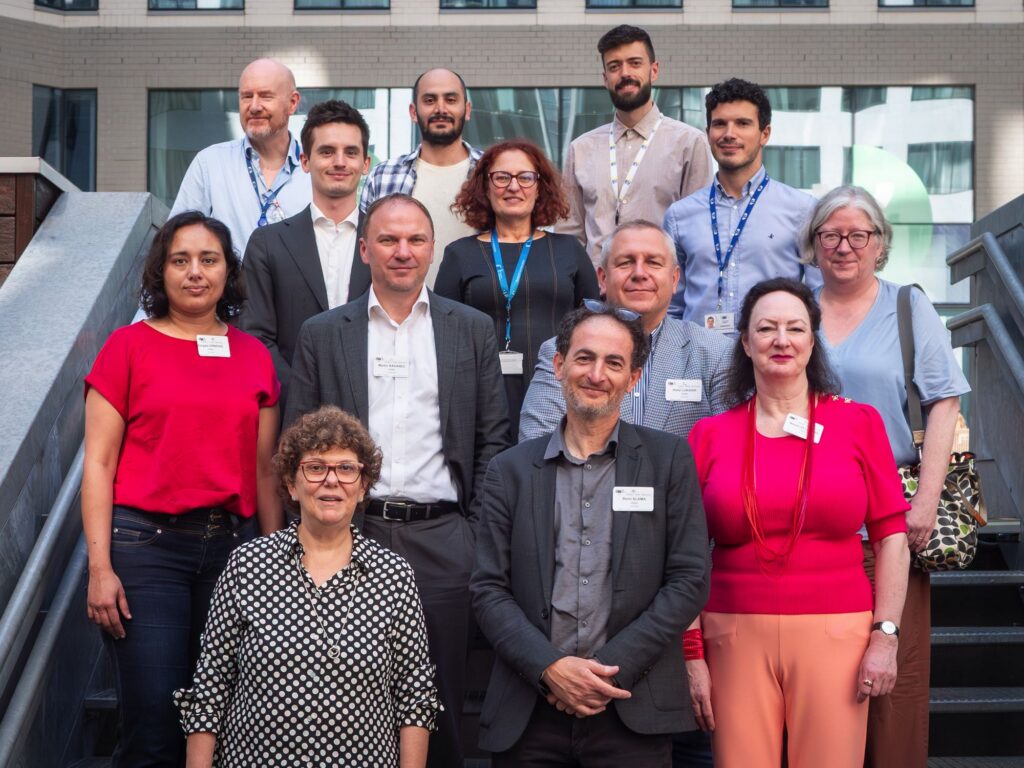
This group works very well together. Everyone is friendly, yet we’re not afraid to share our views, which is important because we don’t always agree. I was looking forward to this meeting, as we hadn’t met in person for a while. We’re becoming good friends, and I truly enjoy working with them.
Interview by Lionel Dutrieux, 15 September 2026.