

On 14 October 2026, SAPEA, part of the Scientific Advice Mechanism (SAM), and Academia Europaea held a panel on science advice for policy during turbulent times. The session was a hybrid plenary of the Building Bridges 2026 conference at the Hungarian Academy of Sciences in Budapest, and was livestreamed. Don Dingwell, President of Academia Europaea, opened the session. Stephen Evans, Institute for Manufacturing, University of Cambridge, moderated a panel of Martin Kahanec, Central European University and member of the Group of Chief Scientific Advisors (GCSA); Noel de Miranda, President of the Young Academies Science Advice Structure (YASAS); Balázs Gulyás, President of the HUN-REN Hungarian Research Network; Mihály Pósfai, President of the Hungarian Academy of Sciences; and Phoebe Koundouri, Athens University of Economics and Business and President of the World Council of Environmental Economists.
The session asked how advisory bodies keep their credibility under political pressure, how to communicate uncertainty without losing usefulness, and what European science advice should build now for future crises. Evans framed turbulence as a system moving more slowly than the forces acting on it, and invited the panel to think about speed, direction and interdisciplinarity.
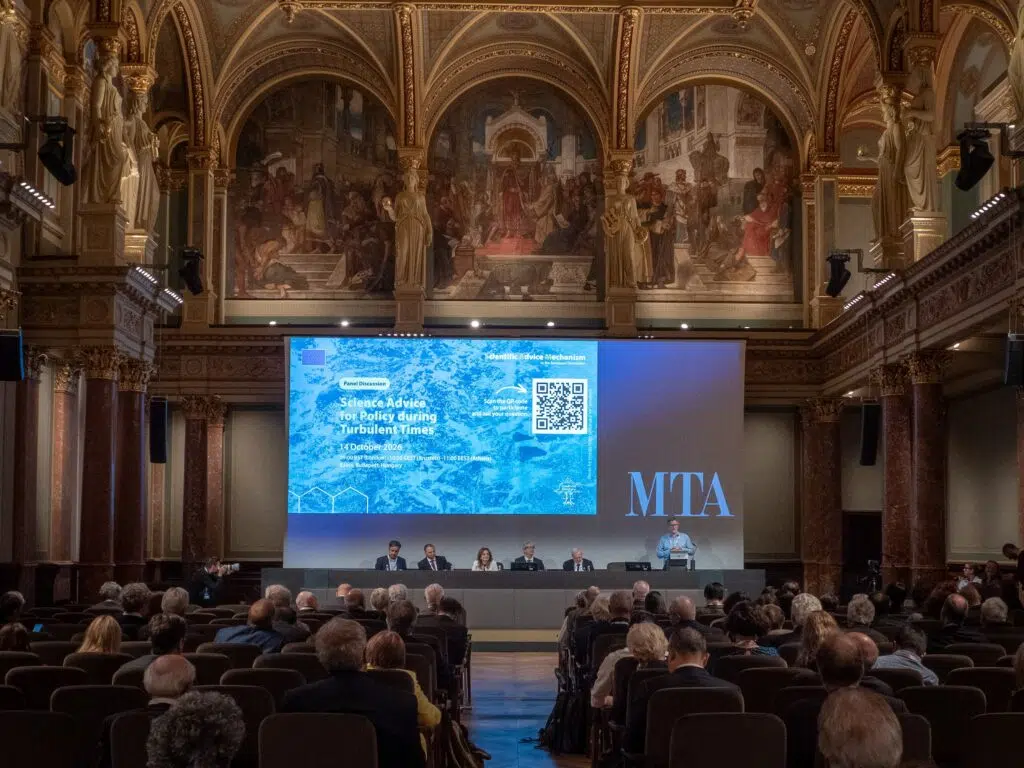
Is this turbulence new? Gulyás asked whether today's situation is unique. Most generations in Europe faced their own crises: famine, natural disasters, epidemics. History therefore offers lessons, and the first one he drew was resilience. Research institutions need to keep communication channels open and share data, knowledge and ideas. Academies and research institutes also need contingency plans and horizon scanning, and should share them with policymakers, society and other scientists.
What has changed is speed. Koundouri argued that the last decade brought an accelerating, almost permanent "multi-crisis". In that setting, gathering excellent scientists to write a report is no longer enough, because problems move faster than the answers. She proposed revising the social contract between science, policy, and society: open science; ensuring every stakeholder can use science, not just be advised by it; truly interdisciplinary systems science; and rewarding scientists for real impact. She described living labs, where scientists and local stakeholders co-design on-the-ground pathways for change.
Open about the process, not only the results. De Miranda noted that every panellist had talked about open science in one way or another. Science too often communicates results without explaining how they were reached or how uncertain they are. Showing the whole process helps people see that scientific consensus changes. He described quality as the guiding principle of science advice, and cautioned that science advice systems cannot be taken for granted, given political interference, misinformation and the erosion of democratic structures. He also noted that scientists feel more exposed, and that self-censorship is rising. Kahanec highlighted science as a pillar of democracy, which depends on the integrity of information spaces.
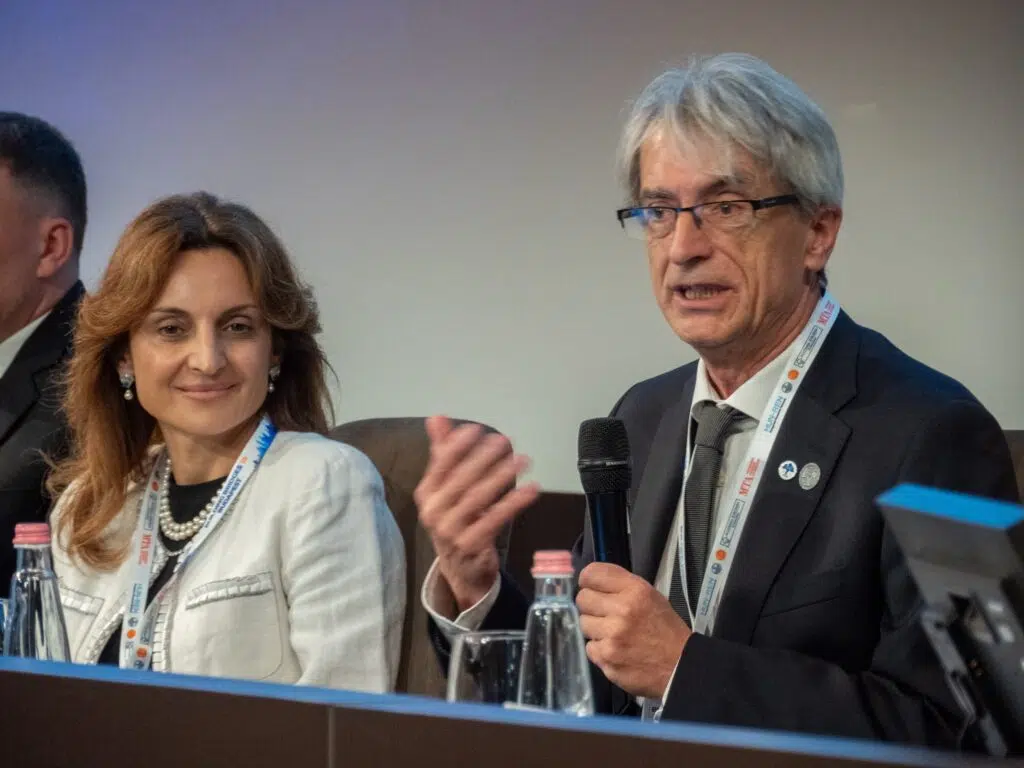
Science closer to communities. Pósfai described an initiative of the Hungarian Academy of Sciences that connects towns and villages to the Academy through locally based researchers. Communities now come to the Academy for help with practical problems, pushing it beyond basic science. Evans saw these requests as a sign of trust in scientists, and as a responsibility.
Making time for policy. Gulyás observed that researchers want to put their time into research, and that engagement with policymakers rarely fits around it. That time must be set aside deliberately, which requires a change in mindset. De Miranda added that science for policy remains a niche, and that early-career scientists with the will and the skill to work with policymakers need support.
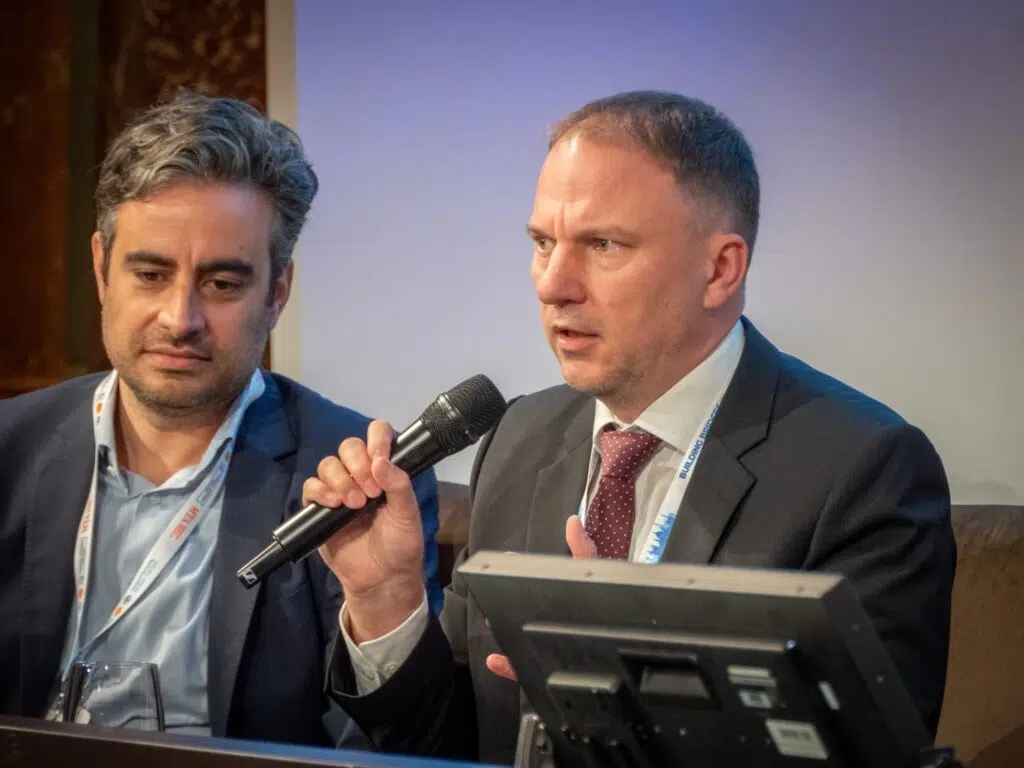
Questions from the audience. Questions covered mistrust of politicians and of the public behind them; what to do when advice is ignored or misused; how to engage when scientists disagree with policymakers, and with each other; and the place of the social sciences and humanities. One panellist noted that science advice leans towards the natural and health sciences, and says little about social and economic inequality. Answers returned to transparency: being honest about uncertainties and trade-offs, listening to less visible groups, and keeping criticism factual.
Evans closed with a personal story: the fear of a first role advising policymakers, which eased on realising that policymakers are people too.
Many excellent questions were submitted, but unfortunately, we couldn't answer most in the time available. We are sharing a selection of unanswered questions with our panellists to address in an article later this month.
Science Advice for Policy during Turbulent Times: An Expert Panel, a special event held at the Building Bridges 2026 conference and livestreamed, was an activity of SAPEA’s knowledge-sharing initiative. It was only possible with the support of hosts Academia Europaea Budapest Hub, HUN-REN, and the Hungarian Academy of Sciences. Moderator Steve Evans and the esteemed panellists made it possible, and the engaged audience, on-site and online, made it a success. Thank you all.