

Academies set their agendas through member ideas, foresight, flagship themes and policy requests; the harder task is staying independent while remaining responsive. Stefan Constantinescu, Professor at UCLouvain and former President of FEAM, moderated.
Ferry Breedveld, President of FEAM, opened the afternoon. Breedveld noted that academies differ in context and working methods, and learn from different failures and successes. Constantinescu added that academies, first created to honour outstanding scientists, now provide governments and society with evidence. The workshop, How Do Academies Identify and Prioritise Policy-Relevant Scientific Topics?, asked how they decide where to focus, and how they balance their own agenda with policy requests. It is part of a SAPEA series that promotes knowledge exchange among Europe's academies and the wider science-for-policy community. SAPEA brings together around over 120 academies from more than 40 countries through five European networks.
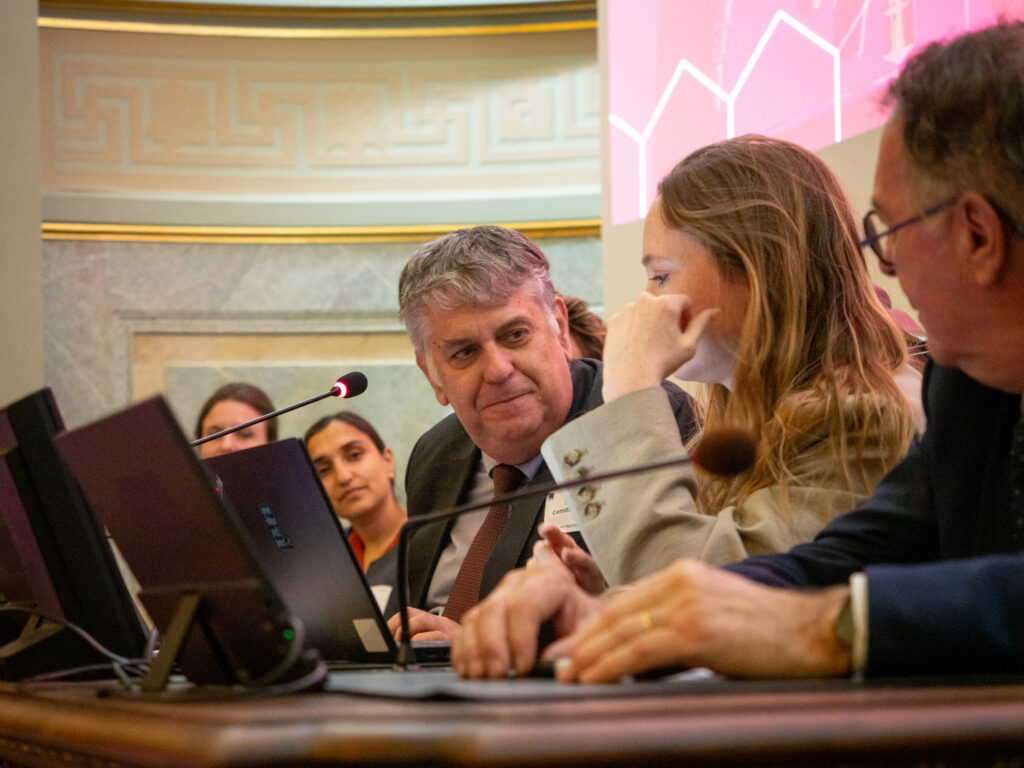
One shared topic, seven academies
Jean-Christophe Giard, Lecturer and Researcher at the University of Caen Normandy and member of FEAM's One Health scientific committee, described how one topic united seven French academies. The academies of medicine, pharmacy, veterinary science and agriculture first joined forces on multidrug-resistant bacteria. The academies of sciences, surgery and dental surgery followed, forming the Hepta-academic Group on antimicrobial resistance. The topic links human, animal and environmental health, and corrective measures exist in the short to medium term. Almost 30 members now organise a symposium every two years. Giard emphasised that credibility depends on transparency, including ethics committees that handle conflicts of interest.
Vincent Jarlier, Professor Emeritus at the Faculty of Medicine of Sorbonne University, described the group's 'AMR Hepta-academic Series', modelled on television series. Each short episode covers one topic in three formats. These are a one-page scientific text, a simpler version with a quiz, and an English version that FEAM shares. Episodes so far define antimicrobial resistance and its two main drivers: antibiotic use and the spread of resistant bacteria. Three episodes on combating resistance are planned for 2027. Jarlier concluded that one clear, uncontroversial topic helped federate the seven academies.
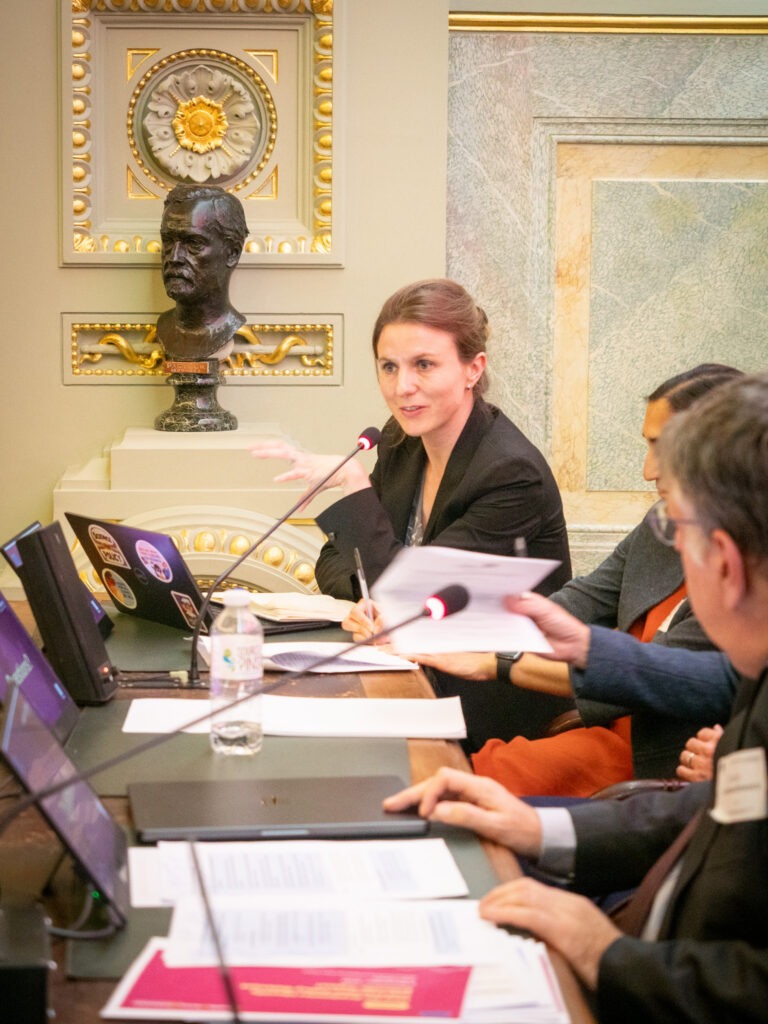
Five approaches to setting an agenda
Five panellists then described their organisations' approaches. Benoît Dubuis, President of the Swiss Academy of Engineering Sciences, was unable to attend.
Gwendolyn Bailey, Policy Analyst at the European Commission's Joint Research Centre (JRC), described technology foresight as a tool for setting priorities. The JRC’s EU Policy Lab provides a collaborative, experimental space that uses systemic and forward-looking approaches to bring scientific knowledge into EU policymaking. In the FUTURINNOV project, Bailey's team supports the European Innovation Council with horizon scanning. It looks both beyond the Council's current funding portfolios and more deeply into existing ones. The team scans articles, patents and funded projects for 'weak signals' of novelty. Experts then assess the signals in three-hour workshops and vote on a top 10 or so. They also discuss what drives or hinders each technology's adoption.
Anne Mark Nielsen, Policy Analyst at the European Research Council Executive Agency, described how a curiosity-driven funder provides 'feedback to policy'. The European Research Council (ERC) took on this task under Horizon Europe. Bottom-up by design, this approach reflects the ERC's curiosity-driven model, drawing on funded research to inform, monitor and help shape EU policy. Because the ERC funds research on excellence alone, across all fields, it had no obvious policy 'customer'. Nielsen's team of around six people now builds annual work programmes around the Commission's political priorities. It answers ad hoc requests and publishes thematic analyses, for example on democracy and on artificial intelligence (AI) and health. It also surveys grantees, including on responsible AI in science with the SAM secretariat.
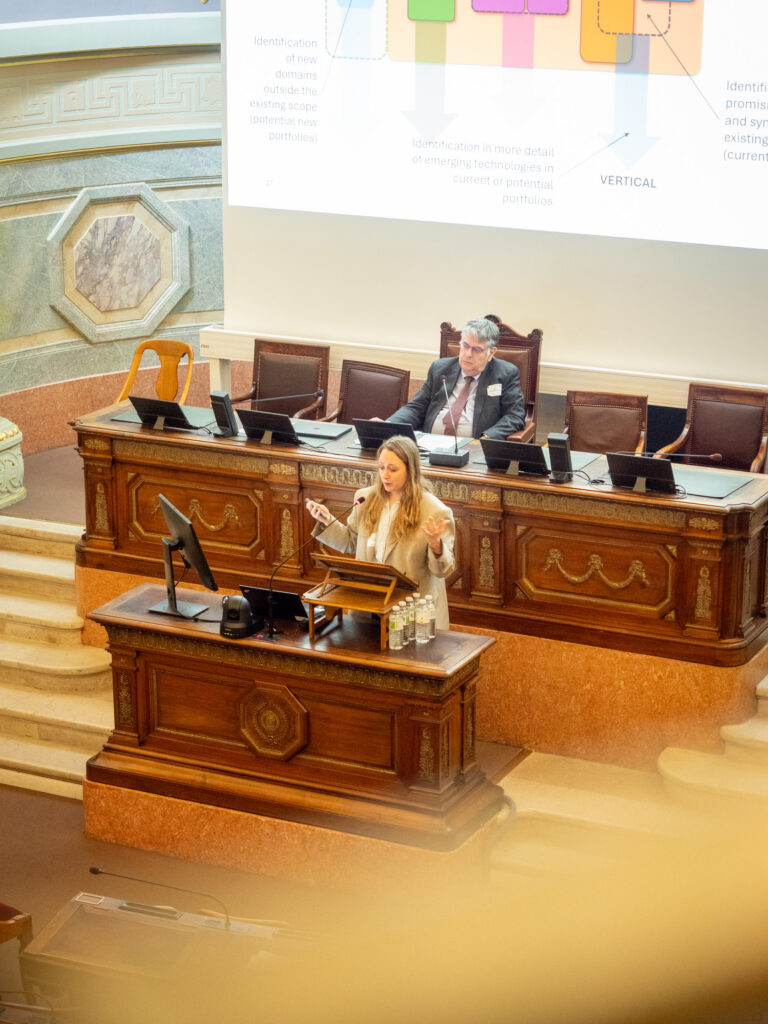
Christian Boitard, Perpetual Secretary of the French National Academy of Medicine, described an academy reorganised in 2022 after an external evaluation. Its four divisions and 10 commissions mix members from different fields, and any member can propose a working group. The Academy produces around 20 reports a year. Topics also come from state requests and from watch units ('cellules de veille') that can advise the Ministry of Health within days. An annual 'grande cause' sets a flagship theme: this year, birth and perinatal health; next year, ageing. A new college of 50 scientists aged 30 to 50 keeps the Academy close to current research.
Anne-Sophie Stevance, Policy Director at the International Science Council, described a foresight exercise on planetary health with the United Nations Environment Programme (UNEP). It looked for what emerges where known trends, such as climate change, meet. An open Delphi survey of 700–800 participants produced more than 1,000 signals. A panel clustered them, regional consultations tested them, and a second round ranked them by likelihood and impact. Eighteen signals remained, with uninhabitable spaces scoring highest. One signal, solar radiation modification, led UNEP and the World Meteorological Organization to brief member states. Stevance stressed that foresight must connect to policymaking.
Sandeep Sandhu, Interim Executive Director – Global, Investment and Insights at Innovate UK, represented the UK Young Academy. Founded in 2022, it brings together early- to mid-career researchers, industry professionals, artists, journalists and public servants. Sandhu described three priorities for its new policy engagement working group. The first is bringing different perspectives into policy, as in a misinformation project with journalists and AI researchers. The second is becoming proactive, through trusted relationships with chief scientific advisers. The third is choosing where to collaborate: on global mobility and visas, the Young Academy joined forces with the Royal Society.
The discussion
Foresight is not about predicting the future. Constantinescu opened the discussion with penicillin, discovered in 1928 but not used in treatment until 1941, and asked whether foresight could have closed that gap. Speakers saw its value in the process. It helps societies prepare rather than react, and it shows what stops a promising technology from scaling up.
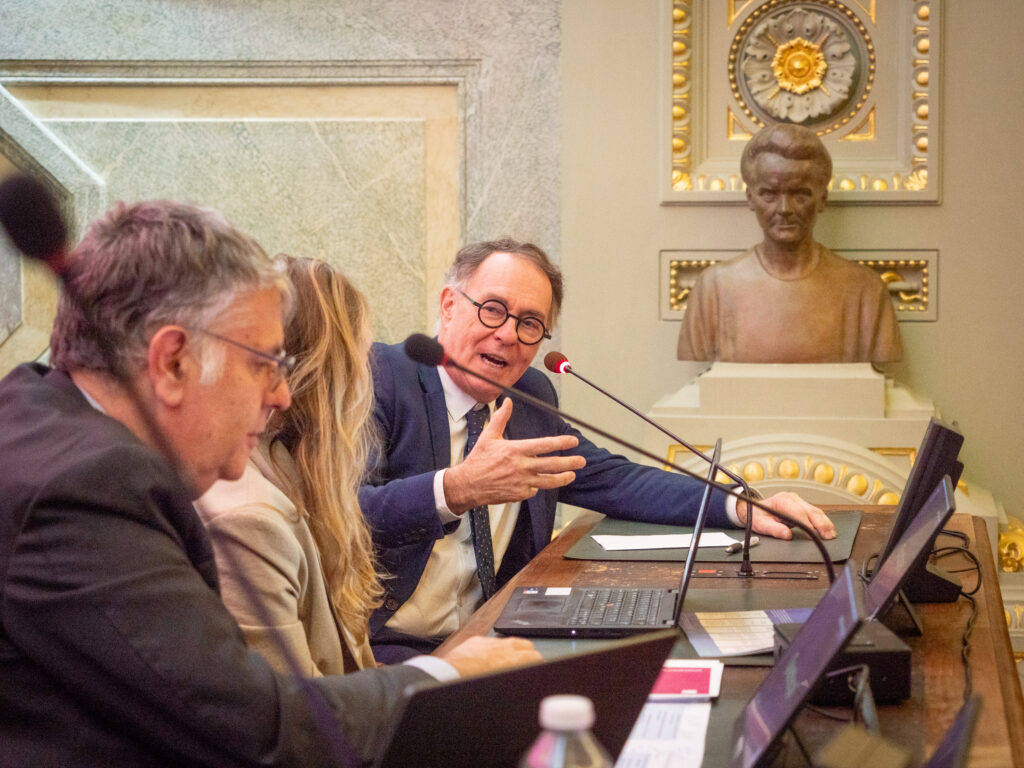
Foresight also has limits. It tends to follow research that is already funded, noted Brian Norton, Vice-President of the European Academies' Science Advisory Council (EASAC). Bernard Charpentier, former President of FEAM and former Chair of the SAPEA Board, asked whether it can keep pace with fast-moving fields such as AI. Some technologies stay out of view for national security reasons, although military bodies such as NATO run their own foresight.
Most topics still start with people. A member brings an idea, and the academy then tests it. At the Leopoldina, ideas pass from members to monthly focus groups of experienced scientists, then to the board. Smaller and younger organisations can add weight by working with senior academies, as the UK Young Academy does with the Royal Society.
Several speakers linked independence to how this process is run. Experts speak for themselves, not for their employers. No single organisation should dominate a workshop, and participants vote on priorities. An independent group, overseen by an ethics committee or board, should choose the topics. Jarlier argued that this independence is why the public accepts academies' recommendations.
With limited resources, speakers named the criteria they use: novelty, pace, timeliness, feasibility, likely impact and an open policy window. For Bailey, a structured, participatory process matters more than the exact criteria. Impact itself is hard to trace. A topic flagged in one foresight workshop later appeared in a funding call, but no one can prove the link. An EASAC report on decarbonising buildings shaped a European directive, yet Member States applied it differently.
What comes next
Constantinescu closed by thanking the speakers, the organisers and the National Academy of Medicine. The routes to an agenda differed, but each faced the same test of independence.
Watch the full recording and see photos from the workshop.