
AI for Crises and Emergencies: Understanding and Communicating Disasters was organised by the Scientific Advice Mechanism (SAM) in collaboration with the Turin Academy and ALLEA. The event attracted national media attention, reflecting growing public interest in AI's role during emergencies.
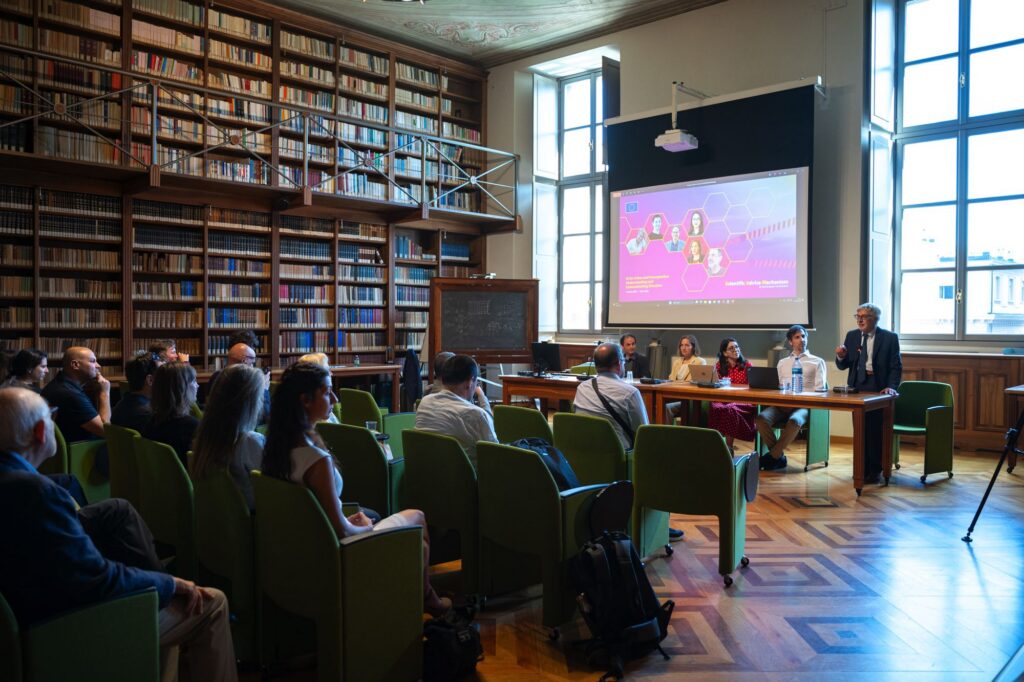
The meeting formed part of SAM’s outreach activities following the publication in December of its rapid evidence reviewand the Group of Chief Scientific Advisors’ statement setting out policy recommendations on AI in crisis management.
Opening the event, Academy President Marco Mezzalama welcomed participants to discuss a topic at the intersection of science, technology and society. Moderator Antonello Provenzale introduced the programme by reflecting on the importance of science communication and public engagement.
Professor Tina Comes, who led the SAPEA Working Group responsible for the rapid evidence review, delivered the keynote address. She argued that AI should not be seen as a universal solution but as a diverse and rapidly evolving set of technologies, the effectiveness of which depends on the context in which they are applied. She emphasised that crises often transcend national borders, requiring coordinated European responses. AI systems can struggle when confronted with novel situations, and their performance is heavily dependent on the quality and availability of data. She also highlighted the challenges of using AI to support decisions involving complex ethical considerations and societal values.
Professor Comes raised concerns about balancing the benefits of AI against the risk of becoming overly reliant on it. Referring to the “Goldilocks dilemma”, she argued for striking the right balance between making effective use of AI and avoiding excessive trust that could erode human expertise. She concluded by calling for stronger data preparedness across Europe, harmonised standards and training, greater strategic autonomy, and a human-centred approach to AI implementation.
Representing the Group of Chief Scientific Advisors, Professor Rémy Slama considered whether AI can help address the growing number of crises facing Europe. He highlighted the distinctive features of crisis situations, including uncertainty, time pressure, the handling of sensitive data and the need for complex coordination. He also reminded the audience of the capital importance of crisis prevention. While AI presents significant opportunities, he noted several risks, including an overemphasis on data analysis at the expense of data collection, the erosion of human expertise and concerns surrounding data leaks and technological sovereignty.
Professor Slama stressed that decisions about the use of AI in crisis management are not purely technical but also societal. The Advisors therefore recommend not only technical assessments but also participatory democratic processes to determine which decisions should remain under meaningful human control, particularly in highly sensitive contexts such as armed conflicts. He underscored the importance of robust governance, infrastructure and accountability frameworks for AI deployment in crisis situations.
An operational perspective was provided by Professor Piero Boccardo of the Polytechnic University of Turin, who illustrated how AI is transforming the use of Earth observation data in emergency management. Advances in foundation models and AI agents are enabling emergency professionals to interact with complex datasets using natural language, reducing the need for advanced programming expertise.
Drawing on examples from the EU’s Copernicus Emergency Management Service, Professor Boccardo demonstrated how AI can detect and interpret changes in satellite imagery. He also highlighted projects that integrate AI into operational emergency services, citing the example of Planet Labs, which reconstructed the devastating 2023 floods in Italy’s Emilia-Romagna region within minutes.
Dr Thomas Kox of the Weizenbaum Institute presented findings from a study involving around 90 international weather experts. While respondents expected AI to improve the quality, accuracy and reliability of warning systems, they also expressed concerns about reduced human involvement, the growing influence of private-sector actors and the potential for AI-generated information to conflict with official public-service messaging. The study revealed broad consensus that AI should support rather than replace human decision-makers, particularly during high-impact events where judgement and accountability remain essential.
The final presentation was delivered by Professor Emilija Stojmenova, former Slovenian Minister of Digital Transformation. She focused on the challenge of maintaining accurate information during crises, showing how AI has increased both the speed and scale at which misinformation can spread. Using examples ranging from natural disasters to technological failures, she demonstrated how misleading information swiftly undermined public trust. At the same time, she emphasised that AI can help identify reliable information and support life-saving interventions. The key, she argued, is the responsible use of AI.
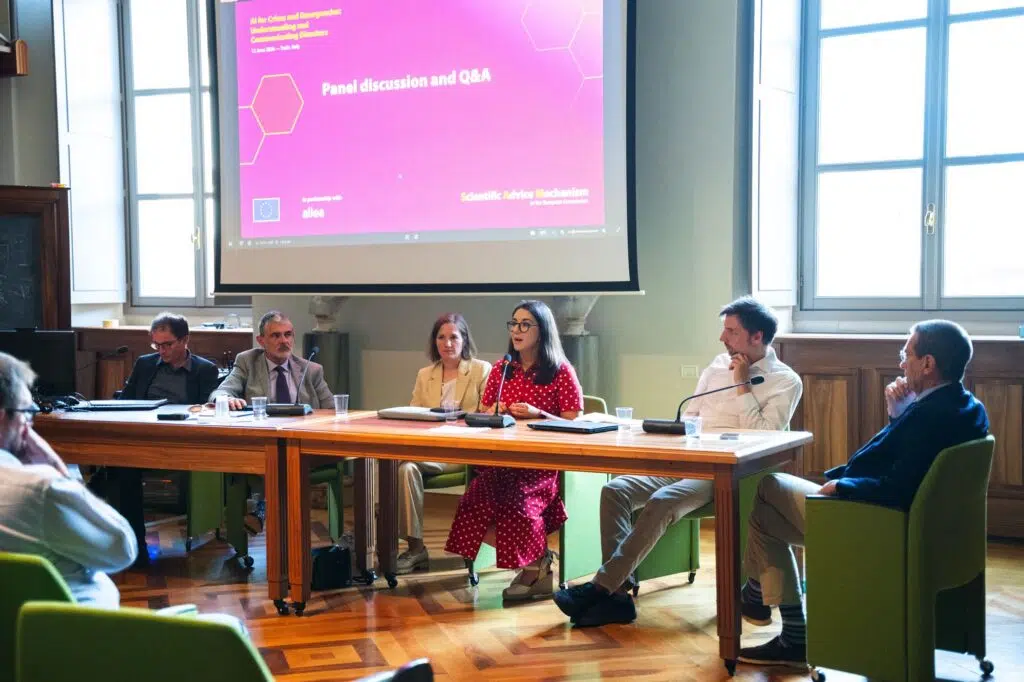
During the panel discussion, speakers debated a range of issues, including data quality, AI system testing, digital sovereignty, misinformation and education. Participants agreed that assessing AI tools in real-world emergencies remains exceptionally challenging because every crisis is unique and suitable benchmarks are difficult to establish. Several speakers highlighted education as a critical priority, calling for stronger digital literacy and AI awareness at all levels, from schools to higher education. Other topics included keeping pace with rapidly evolving technologies, addressing skills shortages and building public trust.
Closing the event, Antonello Provenzale thanked the speakers and participants for an exchange that highlighted both the considerable promise of AI and the complexity of applying it to some of society’s most pressing challenges.
Review the event’s webpage.