
The in-person event, organised together with YASAS and ALLEA, set out a practical aim: to understand how today's pressures are influencing who participates in science advice, and what that does to its relevance and legitimacy. It was moderated by YASAS executive board member Jovana Milic.
Science under pressure
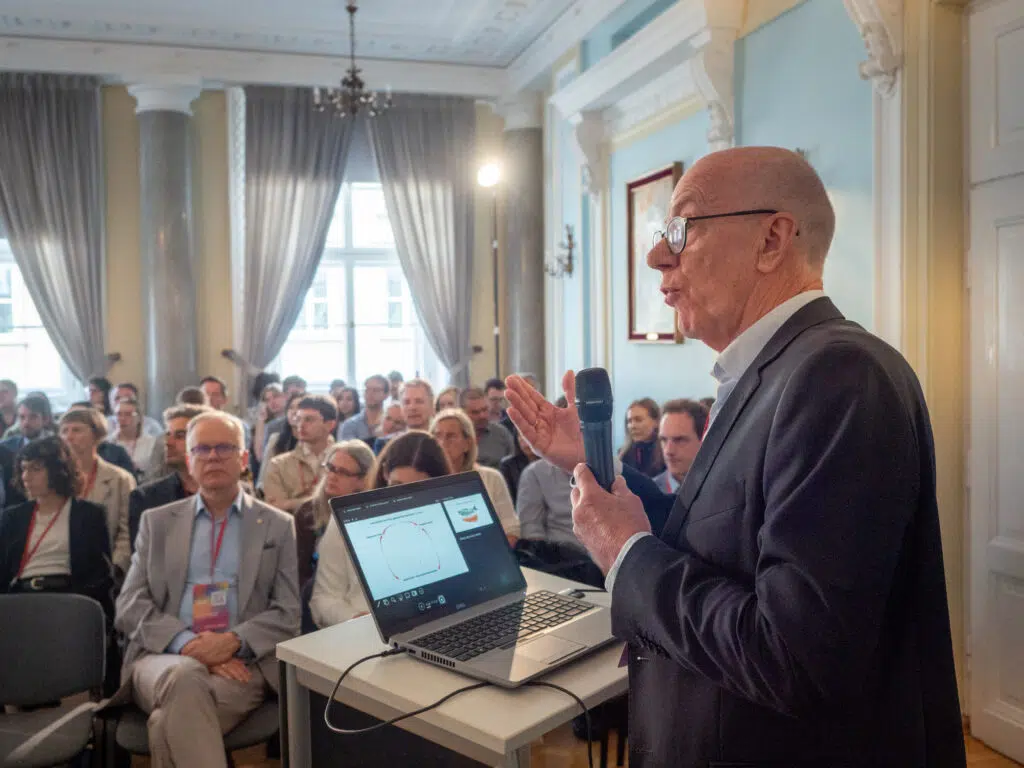
In the keynote, Peter Maassen, a professor of higher education studies at the University of Oslo, named three forces bearing down on science advice: political polarisation, geopolitical turbulence, and a fragmenting institutional landscape. The polarisation, he argued, goes beyond ordinary democratic disagreement to "less acceptance for different points of view," amplified by a US administration that has dismantled diversity programmes and pressed European partners to do the same.
He recalled that, according to the Eurobarometer, more than 80 per cent of Europeans remain positive about science, a figure that has been stable for decades, but nearly half now agree that scientists look only at narrow questions and ignore the wider social picture. "The attitude towards science is positive," he said, "but the attitude towards scientists is getting more and more negative."
His central example was Norwegian salmon. It used to be simple to govern: one ministry was responsible, advised by a handful of trusted institutes whose scientists and officials had all trained together. Today the same fish cuts across half a dozen ministries that often disagree: it is at once wild stock to protect and a farmed industry to regulate, a food and a major export, and even a diplomatic lever, as when China stopped buying Norwegian salmon after the Nobel Peace Prize went to a Chinese dissident. The point was that the things science now advises on have grown too tangled for the old, tidy model. Quoting a colleague, he warned that this is not change within the existing order but the end of that order itself: the stable, US-led world that science had long taken for granted is over. His closing question was blunt: "What are we going to do to prevent that we are bulldozed over?"
Four short talks
A round of lightning talks moved from the system to the people inside it.
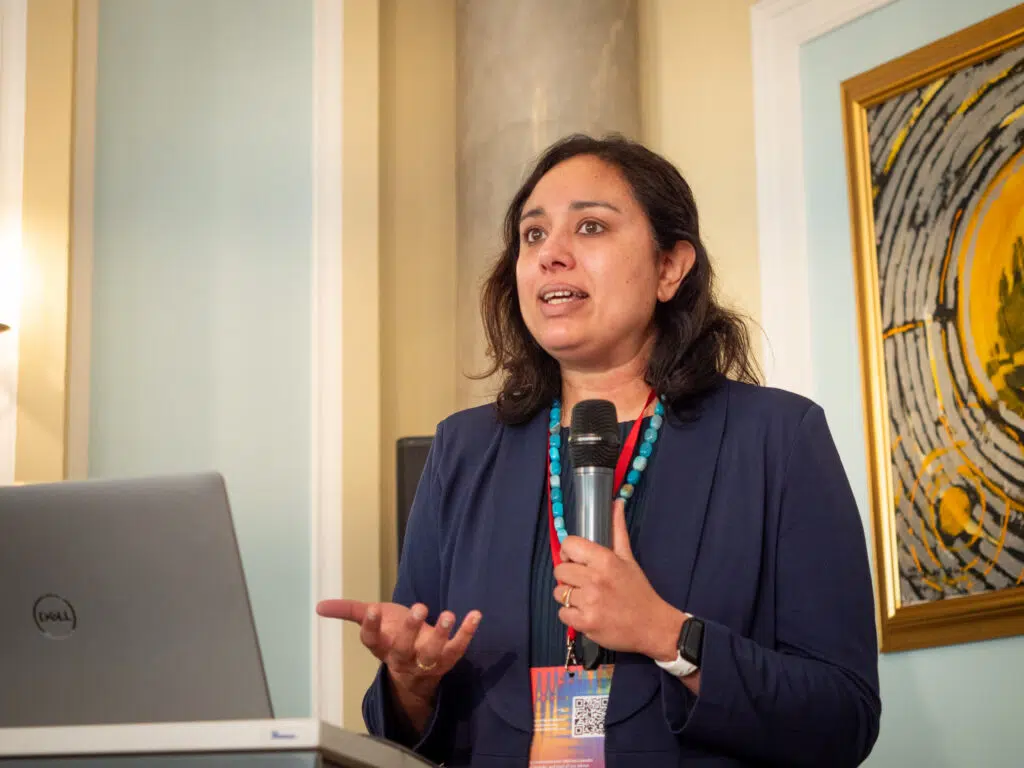
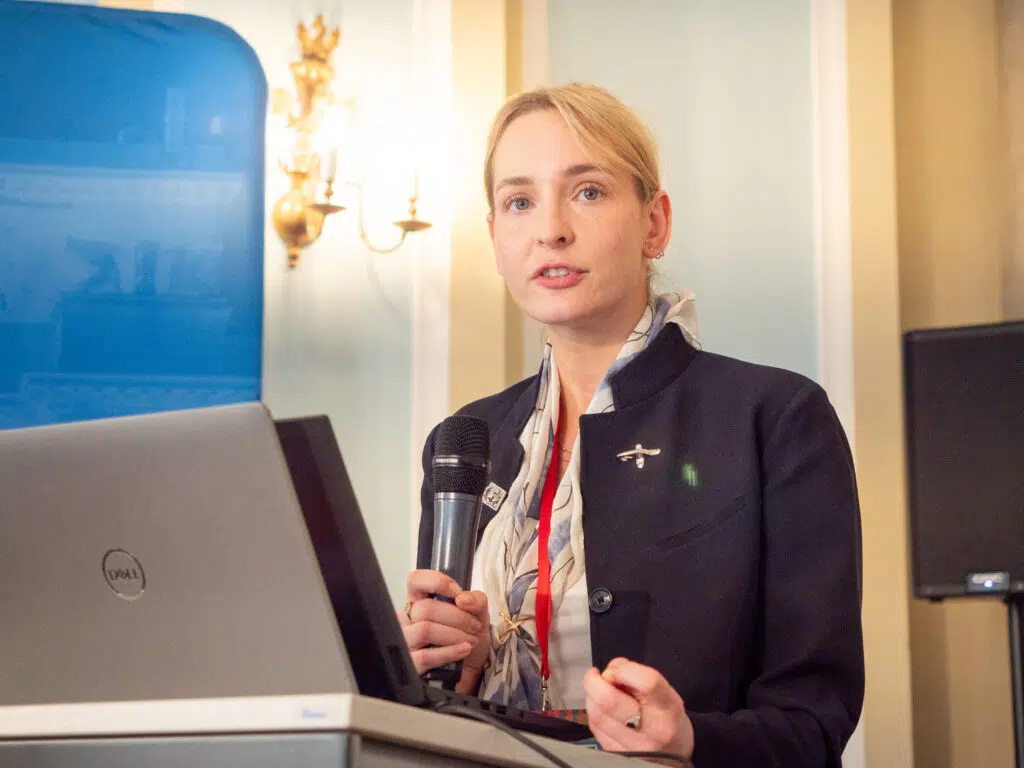
Mangala Srinivas, a professor of cell biology at Wageningen University and vice-chair of the Group of Chief Scientific Advisers, pointed out that the existence of young academy networks, now taken for granted, is barely a decade old. The networks never had unanimous support. She warned that such gains can be taken away quickly. Seniority, she added, breeds isolation: "narrow rooms produce narrow questions, and also narrow answers". Science advice must be "not only excellent but open, plural, and safe to participate in." The point, she added, citing a recent report from INGSA (the International Network for Government Science Advice), is that the public rarely questions the science itself so much as who is giving the advice, whose interests it serves, and whether the process is transparent. As such, trust depends on the public seeing itself represented among the advisers, rather than being lectured to from the outside.
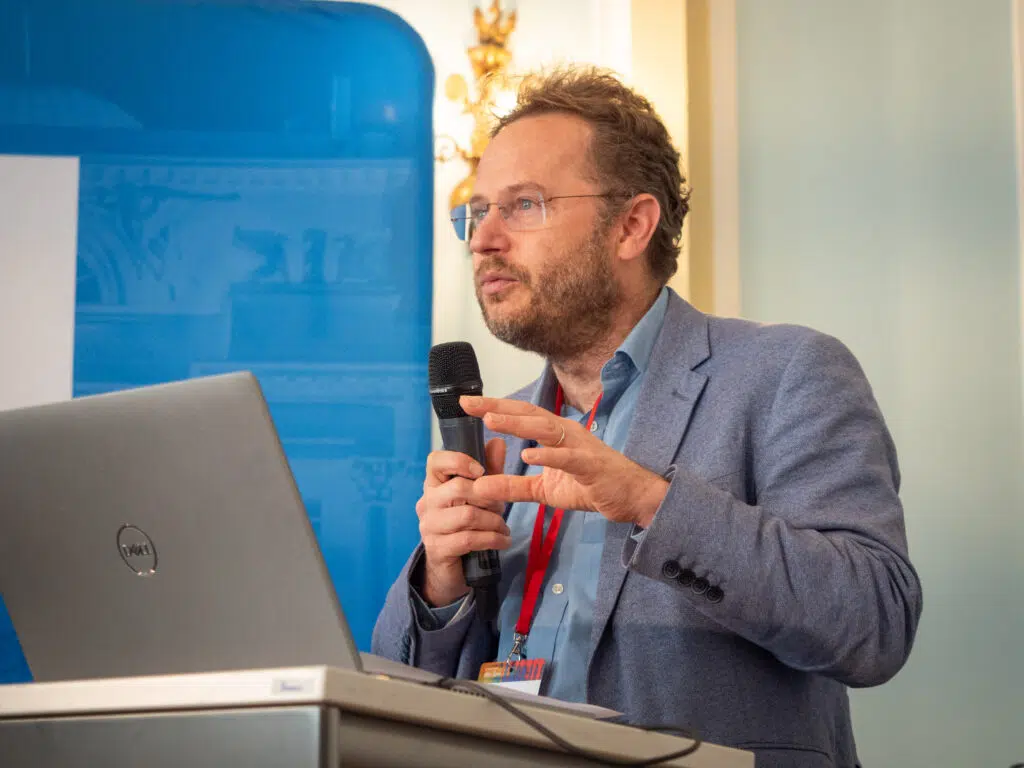
Koen Jonkers, who heads a unit at the European Commission's Joint Research Centre, noted that top advisers remain "predominantly white," male and middle-aged, which erodes trust among those who never see themselves represented. Clear rules help: under Horizon Europe, he said, women now coordinate 32 per cent of projects, up from 24 per cent, and make up 53 per cent of expert-group members, with little sign that gender-equality plans do any harm, though the work of running them falls mainly to women, eating into their research time, and a focus on gender can overlook other marginalised groups. His wider point was that good advice depends on people being able to move across disciplines, sectors and borders, and that this mobility is shaped by privilege: those from marginalised backgrounds face funding limits, visa restrictions and closed networks. Besides, interdisciplinary researchers are disadvantaged in a discipline-based career system, and holders of indigenous and traditional knowledge are often shut out for lack of the administrative machinery to handle grants.
Anna M. Górska, an assistant professor at Kozminski University in Warsaw, reframed the question: "It's not only about who is in the room, but also who feels comfortable enough to be in the room... Who is taken seriously? And who pays the price for participation?" Science advice, she said, is encouraged as a kind of mission, but academics are rewarded for publishing and for grants, not for giving advice, so it becomes invisible after-hours work that falls hardest on early-career researchers, who also bear the greater risk of harassment or of being branded "too political." Science advice requires courage, but “let's not expect to be courageous without any institutional support," she argued.
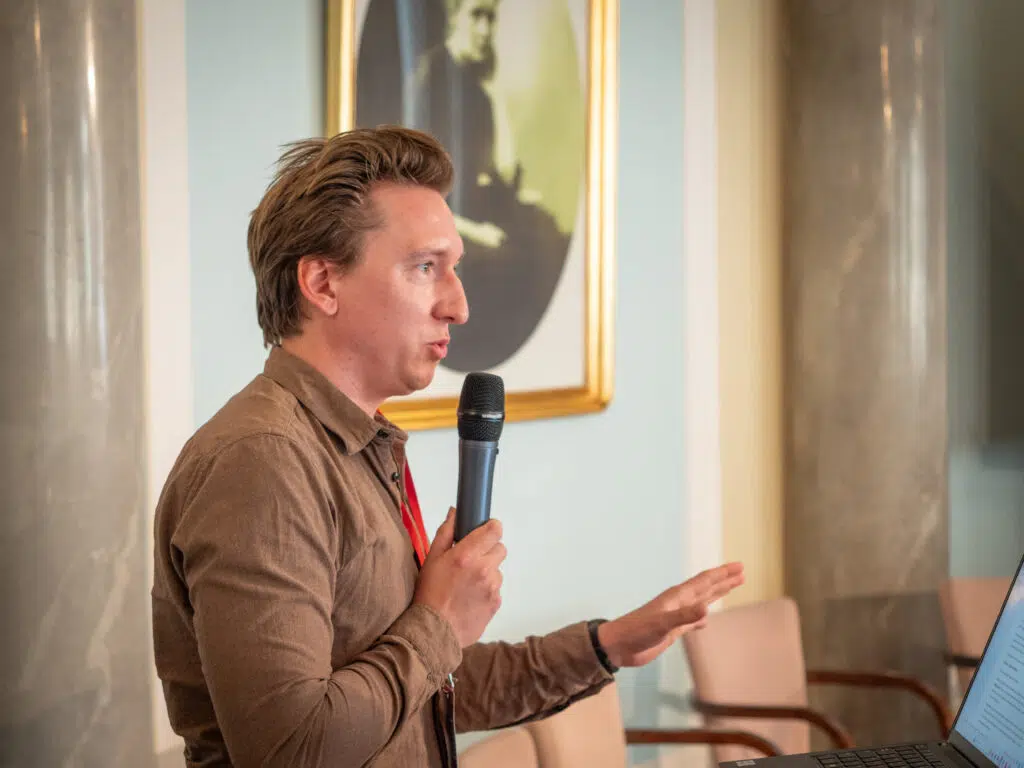
Silvio Suckow, researcher at the Weizenbaum Institute in Berlin, argued that diversity is a method, not a courtesy. Interdisciplinary work, he said, means learning to "hold the tensions" rather than rushing to harmony, and he distrusts the phrase "follow the science," the idea popular during the pandemic, that policy is simply dictated by a single settled body of evidence. There is no such single thing, he argued: "Which science do you really want to follow?" His advice for any final product: don't erase the disagreements. Make everything visible: the questions still left open, and the ones that were resolved, shown together with how they were worked through, because advice that looks too clean invites suspicion.
What the breakout groups reported
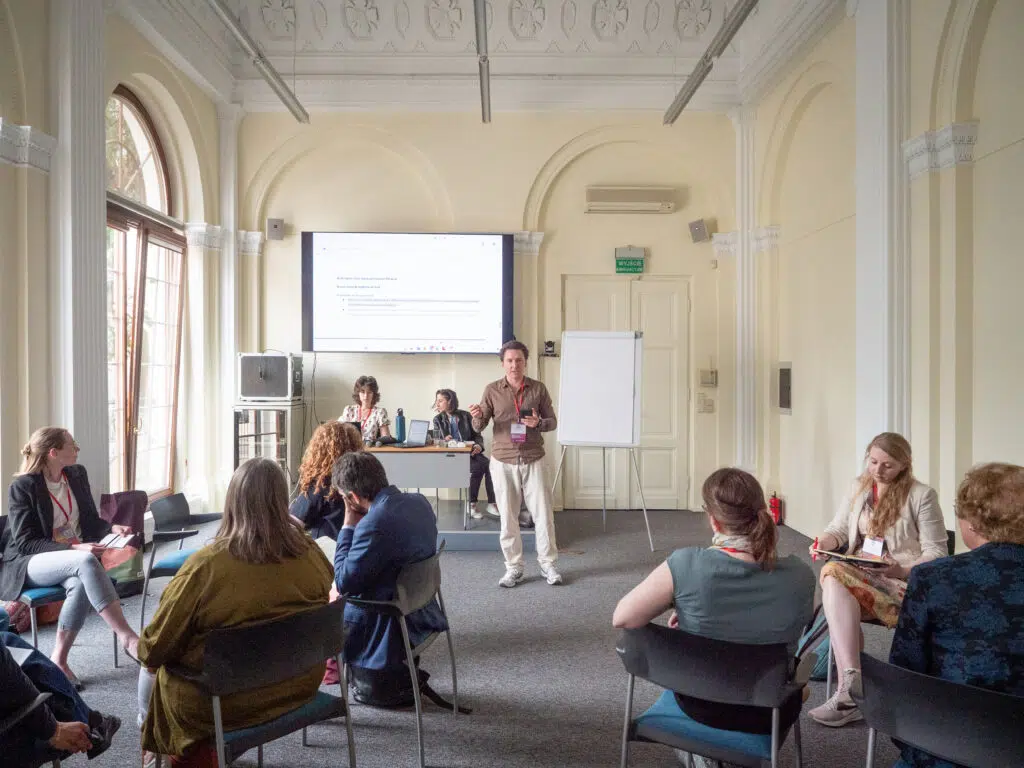
Reporting back, Górska's group on incentives found that not everyone wants recognition: visibility often means exposure. The answer, she said, is not more bravery but "strong institutions, strong universities" that protect people "so that we don't have to be courageous to be impactful."
Srinivas's group on academic freedom and inclusion caught a bias in the session's own prompt, which asked whether to include underrepresented groups "while maintaining high scientific standards," as if inclusion threatened them. Their needs: incentives, protection, and transparency about who is consulted.
Suckow's group on diversity of expertise kept returning to time and to the tension between recruiting top specialists and recruiting "bridge builders", less established, often younger researchers who connect different fields and bring fresh ideas rather than the deepest single-subject expertise. Their recommendations: build interdisciplinarity into expert selection before it begins, reward it earlier in careers, and, once a piece of advice is finished, have it reviewed by peers so that what is learned shapes how experts are chosen and how the work is done next time.
Jonkers's group, focused on early- and mid-career scientists, concluded that experts do not "start from the same baseline": by the time someone reaches the top, many others have dropped out, and those who remain are the ones who overcame the barriers along the way. Selection, they argued, should therefore weigh not only past reputation but future potential and the obstacles a person came through. They also stressed that giving advice carries an opportunity cost (time taken from publishing) so it must count toward an academic career rather than merely bring visibility, and flagged structural barriers such as visa and mobility restrictions, suggesting Europe consider visas tailored to scientists.
The discussion
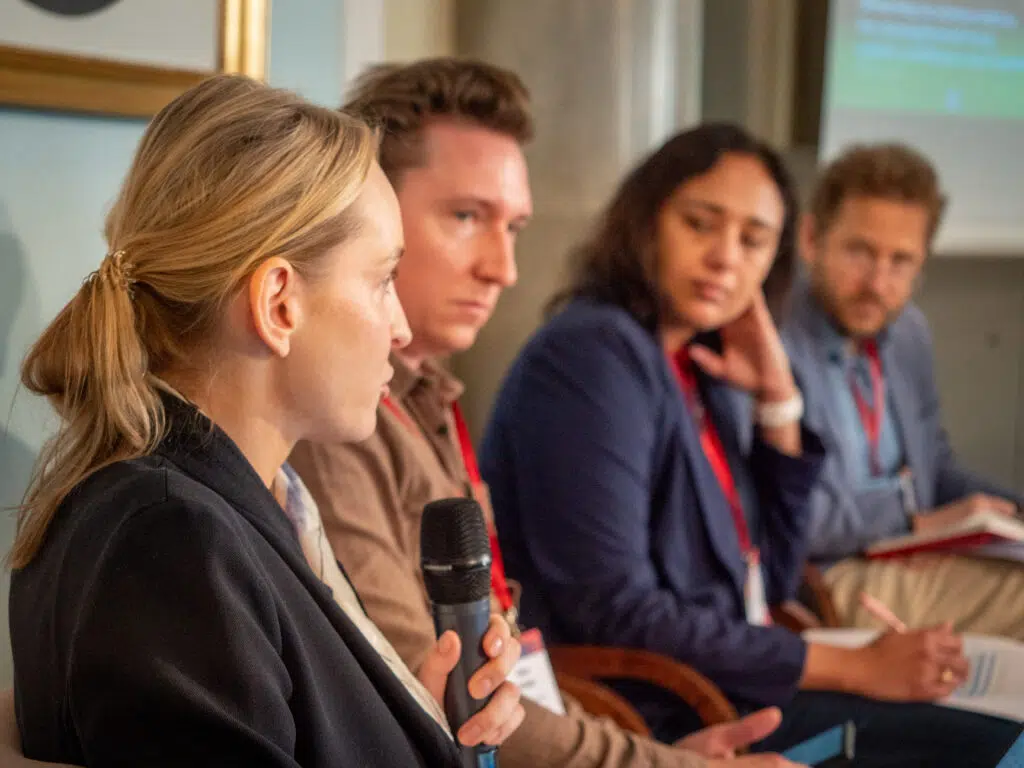
When asked to defend the premise (does diversity actually make advice better?), the panel had converging answers. Jonkers argued it improves both quality and trust: a varied group spots questions and blind spots that a group of similar people would miss.
Górska punctured the room's self-image, noting that academics believe they are meritocratic "but the reality is that we are not". In her own research, every senior male academic she interviewed insisted he didn't see gender. Bias, she argued, rarely takes the form of refusing to hire a woman; it hides in how differently she is judged afterwards, which is precisely why those most convinced of their own neutrality are the ones who never notice it. The evidence that diversity improves quality is clear, she said, so "be scientific about this." She added, "apart from being scientific about it, I think we should be human about it as well": diversity is also a matter of fairness, not only of better results.
Srinivas added that the public's image of the idle ivory-tower scientist corrodes trust, and noted that the very question of why diversity matters tends to come from those who have never been left out: "only people who are already included would ask why should we include everybody”. Maassen pointed out that exclusion is also external: in Norway, a fifth to a quarter of the population never reaches academia, and many feel unrepresented by it.
Górska recalled being called unpatriotic for writing about gender inequality in Poland. Scott Bremer, of the University of Bergen, noted some recent improvements. He explained that the spread of "narrative CVs" —a way of assessing researchers that describes the full range of their contributions, including policy and advisory work, instead of counting only publications— allows science advice to be rewarded as part of one’s academic career.
Srinivas closed with a challenge. Scientists, she said, are trained to add nuance, habits that serve rigour but are "terrible for communication." She set this against the farmers who had driven their tractors into the streets to protest: a blunt, impossible-to-ignore message that cut through to the public in a way scientific caution never does. How, she asked, can scientists keep their integrity and their nuance while still communicating clearly and memorably? Or, as she put it: "Where are our tractors?”.
Three dilemmas
Flavia Schlegel, former Assistant Director-General for Natural Sciences at UNESCO and an advisory board member for INGSA, concluded with three dilemmas. First, diversity is not a fixed practice and is "not the same as equality, nor as equity." Second, "the future does not fit in the containers of the past", making it the responsibility of senior scientists, not just the young, to open more seats at the table. Third, science can no longer promise neat, final solutions: in a fast-changing world, the honest thing it can offer is not certainty but "relatively safe pathways into a future", sound directions to move in rather than definitive answers. She tied this to what she called a "crisis of trusted authorship": in the age of tools like ChatGPT, it is increasingly hard to know whether something was genuinely said, invented, or simply a lie, which eats away at trust in knowledge itself. EDI, she said, "is not an option, but it's a very complex and difficult challenge”.
The organisers and Jovana Milic thanked the speakers and participants, noting that the value of the day lay less in consensus than in a room willing, as Suckow put it, to hold the tension long enough to learn something.
The event took place on 29 May 2026 at the Staszic Palace in Warsaw, Poland, now the seat of the Polish Academy of Sciences and the Warsaw Scientific Society. Watch the recording on our YouTube channel.